Local System Knowledge
The team works on pressure regulators, pumps, tanks, and water lines across Colorado. Experience with Denver-area homes helps technicians consider how older service lines and regulators can affect pressure.
Centennial’s freeze-thaw cycles can stress buried water lines, so a pressure drop may call for more than cleaning a fixture. We check the supply path before recommending a repair.
Near Cherry Creek State Park, homes range from detached houses to townhome communities, and the plumbing layout affects how we trace weak flow. Centennial Center Park gives another local reference point for our service coverage.
Low humidity can increase dust and static indoors; during plumbing work, we protect the work area and keep open pipes exposed only as needed. Our team explains what we find in plain language, whether the issue affects one faucet or several fixtures.
We serve Centennial, including Castlewood and Castlewood (historical), with clear scheduling updates and a repair plan before work begins.
Centennial’s four distinct seasons can change access to outdoor plumbing; we plan exterior checks around current conditions instead of assuming a service line is easy to reach. Summer thunderstorms may bring hail and flash flooding, so exposed work and equipment need practical protection. Winter freezes can burst exposed pipes, making it useful to report any outdoor plumbing damage along with a pressure change.
We schedule with local residents and property owners, then check the symptoms and explain the likely cause before proposing work. If cold snaps freeze a shallow service line, we assess the accessible supply route rather than guessing from fixture flow alone.
When a shower slows as another tap runs, or upstairs faucets barely stream, we first compare flow at more than one fixture. In Centennial’s 1970s and 1980s subdivisions, a home’s pipe layout and condition can shape how pressure behaves; we inspect before recommending a repair. You can safely check whether the problem affects one fixture or the whole house.
If pressure suddenly falls throughout the home, spring snowmelt may raise groundwater around foundations, while hail can damage exposed plumbing vents or equipment. We check accessible fixtures and supply components, and snowfall can delay excavation or equipment delivery when a buried line needs attention.
Start by noting whether both hot and cold water are affected. We serve Centennial ZIP codes 80112, 80111, 80015, 80122, 80121, 80016, 80155, and 80161.
After a water main repair, Centennial customers may notice weak flow at several fixtures; we check whether the pressure change is isolated or house-wide before settling on a cause. Monsoon-season storms can restrict outdoor service work, so a buried-line inspection may need safe access and workable conditions. Near Cherry Creek State Park, changing weather is a practical scheduling factor, not a reason to guess at the repair.
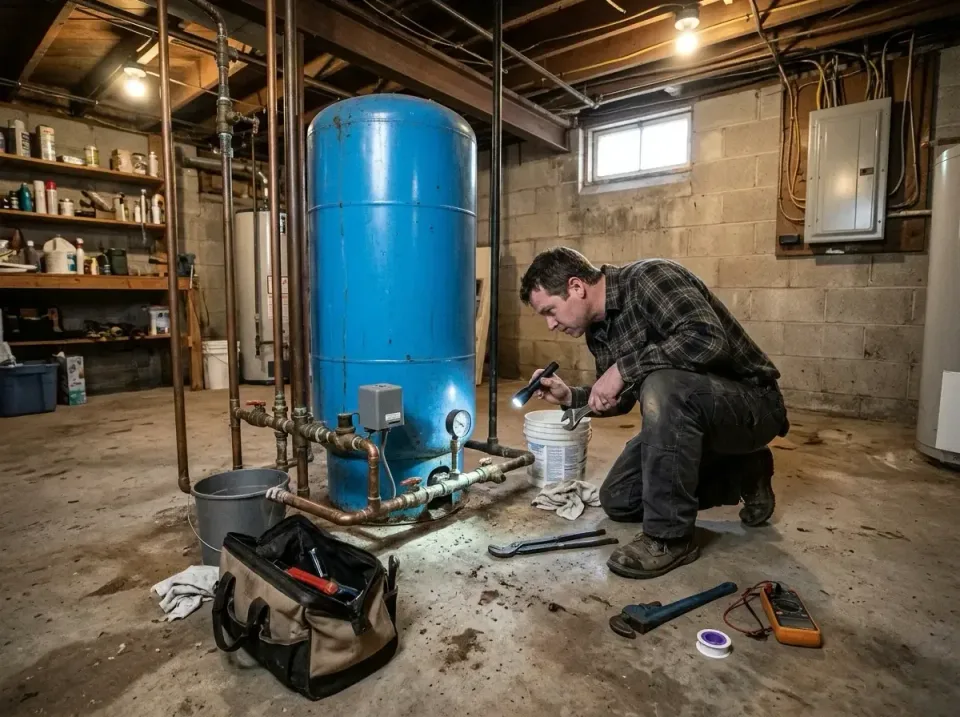
Pressure testing requires a gauge rated for the expected system pressure. We use an appropriate gauge and compare readings with the customer’s report, including whether hot water runs weaker than cold.
If the hot side is affected alone, we focus the inspection there. Centennial Center Park is another local marker for our coverage; call our team when reduced pressure persists after utility work or affects several fixtures.
A repair that changes regulated plumbing may require the applicable local permit or inspection; skipping required review can leave work unverified and complicate later service. Centennial is not Denver, so Denver plumbing permits and the 2022 Denver Building and Fire Code provisions should not be treated as the automatic rules for a Centennial property. We confirm which authority applies before work proceeds.
The Safe Drinking Water Act’s lead-free plumbing requirements matter when components are replaced, so we select compliant parts for the job. Denver Water backflow prevention requirements apply only where relevant to that utility and installation; they are not a blanket rule for every Centennial home. For properties near Centennial Center Park, we still verify jurisdiction rather than assume Denver rules govern.
Colorado Plumbing Pros checks the cause and explains the work before recommending a repair.
The team works on pressure regulators, pumps, tanks, and water lines across Colorado. Experience with Denver-area homes helps technicians consider how older service lines and regulators can affect pressure.
Technicians check the home’s supply and fixtures, explain what they find, and discuss the repair before work begins. You can understand the proposed scope and ask questions before deciding how to proceed.
When a repair calls for permits or local requirements, the team coordinates them as part of the work. Technicians also document pressure readings and regulator settings after repairs for a clear record.
The crew checks the system, explains the cause, and verifies the repair.
Discuss The Issue
A technician asks where pressure is low and whether it affects hot or cold water, one fixture or the whole home. You get a focused starting point for the inspection.
Check Supply And Fixtures
The technician records static and flowing pressure, checks multiple fixtures, and reviews accessible shutoff valves. You get findings based on the home’s supply and how its fixtures behave.
Repair And Verify
The crew completes the agreed repair, then checks pressure and documents readings or regulator settings. You receive a practical summary of the work and the system’s condition afterward.
A pressure gauge needle keeps bouncing. Repeated movement can make it harder to tell whether the system is holding steady pressure. Keep track of when you notice it and avoid adjusting equipment settings without knowing what the system requires.
Pressure changes after water main work. A new change following service to the main may be worth checking, even if some fixtures still seem usable. Note which taps are affected and whether the change is consistent throughout the home.
Rapid temperature changes can make pressure changes more noticeable as household water use shifts. Arrange an assessment if flow seems inconsistent, so a technician can check the supply and fixtures and explain whether a repair is needed.
Summer hail and thunderstorms can bring changing conditions around outdoor water lines and equipment. If pressure changes after a storm, have the supply and fixtures checked to help identify whether the issue is inside the home or at its water line.
A pressure check in fall can help identify regulator, pump, tank, or line concerns before colder weather arrives. If flow has been uneven, share which fixtures are affected so the technician can assess the system and discuss appropriate work.
Cold snaps and periodic snow make sudden pressure changes important to investigate, especially where exposed lines may be vulnerable. If flow drops, arrange an assessment to help locate the cause and determine whether a water line or pressure component needs attention.
Permit needs depend on the work and local requirements. Ask who will identify and coordinate any required approvals, so you understand what must happen before the repair can proceed and what is included in the service.
A clear scope helps distinguish diagnosis from repair work and clarifies which pressure components or water lines are included. Ask what the technician will check, what work is proposed, and what will be verified when it is complete.
Technicians may need access to fixtures, shutoff valves, a pressure regulator, a pump, or a pressure tank. Confirm which areas should be reachable before the visit, especially if equipment is behind stored items or inside a utility space.
Review the written scope, any exclusions, and how changes to the work are handled before approving a repair. Clear terms help you understand what has been agreed to and what would require a separate discussion.
Request a quote online or contact our Centennial, CO team directly by phone or email.
Watch for these warning signs: visible damage, active leaks or water intrusion, unusual noises, rising energy bills, or a system older than 15–20 years. If you spot any of these, call us immediately for a free assessment early action prevents far costlier repairs.
Costs depend on the scope of work, materials, and your location. We provide a detailed written estimate before any work starts no hidden fees, no surprises. Call us or fill out the quote form above to get a number specific to your property.
Most requests receive a same-day or next-business-day response. For emergency situations, call us directly we maintain priority scheduling for urgent cases across States.
Yes. Every provider in our network carries the required state and local licenses, general liability insurance, and workers’ compensation coverage. We verify credentials before connecting you with anyone.
We operate across Colorado. Browse our state pages to find the cities we serve in your area.
Ask for proof of license and insurance, a written scope of work, a detailed cost breakdown, timeline, warranty terms, and references from recent local jobs. Never pay the full amount upfront.
Low Water Pressure Repair is also available in these nearby communities across Colorado.