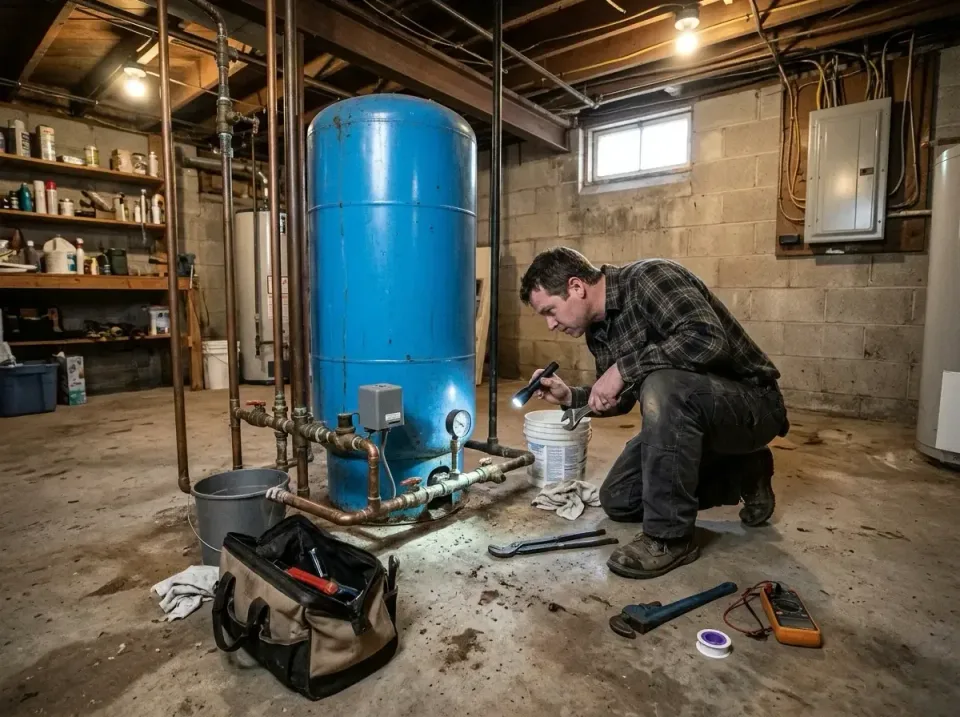
Water Booster Pump Installation
We install residential booster pumps sized to household demand; Colorado jobs typically run $800–$2,500, with pump capacity and electrical work affecting the total. Dry air makes open plumbing work evaporate faster.
A well pump that starts every few minutes often points to a pressure tank, switch, leak, or pump problem. Don’t ignore the pattern. Repeated starts can wear equipment and leave showers or faucets with uneven flow.
A fixture flow rate is the amount of water a tap delivers over time; noticing whether flow drops at one fixture or throughout the house helps narrow the cause. We first check the system rather than recommend a part from the symptom alone.
Near Rocky Mountain National Park, freeze risk can make exposed piping and outdoor equipment worth checking after a cold spell. Colorado’s four distinct seasons can also affect outdoor access, so note when cycling began and whether weather changed. Colorado Plumbing Pros can explain the likely cause and repair options before work begins.
If the pump kicks on shortly after water use stops, the system may be losing stored pressure or the pump may not be stopping at the right point. A well pressure tank holds water under pressure so the pump does not need to start every time someone opens a tap; a failed bladder or incorrect air charge can reduce that reserve.
The pressure switch signals the pump to start and stop, and sticking contacts or poor adjustment can disrupt that cycle. Start by noting how often the motor runs and whether it happens when every fixture is closed. Repeated starts are a symptom, not a diagnosis.
We use a well pump pressure switch troubleshooting guide approach: observe the cycle, check system readings, and compare the switch’s operation with what the pump is doing. Don’t open electrical equipment to inspect contacts.
In Colorado, high altitude can increase freeze risk, and winter freezes can burst exposed pipes; a leak after a cold snap may make the pump run repeatedly. If the pattern began after freezing weather, look for visible dampness without touching wiring. Our team diagnoses the cause before recommending Well Pump Repair.
A well pump control box contains electrical components that help operate the motor; buzzing, repeated clicking, or a pump that struggles to start calls for professional assessment rather than trial-and-error replacement. The tank also matters: if it cannot store enough pressurized water, the pump may start after only a small amount of use. A technician can check whether the tank, switch, pump, or a leak is responsible instead of swapping parts based on guesswork.
Pump design has a long history: Denis Papin developed centrifugal pump designs in the early 18th century. The practical lesson is that pump type and operating conditions matter; efficient pump selection must match the well and household demand, not just the motor’s apparent size.
If the pump runs but cannot keep up, the wrong replacement choice can repeat the same problem. For related symptoms, see our guide to what a bouncing pressure gauge says about your system.
DIY checks and call a pro?
You can safely record when the pump starts, note whether taps are open, and listen for water hammer, a banging sound caused by abrupt flow changes. Keep clear of wiring and pressure controls.
If cycling continues while no water is being used, or you see water around the tank or piping, stop troubleshooting and arrange an inspection. Water hammer alone does not confirm a pump fault, but paired with repeated starts it gives a technician useful context.
A simple observation is useful. Electrical testing is different.
Our Colorado-licensed plumbing professionals can check the well pump, tank, switch, and visible piping as a system, then explain findings in plain language. For a pump that runs often but household flow remains poor, a well pump repair assessment can help determine whether a component has failed or another condition is affecting operation.
Colorado’s four seasons can make outdoor access harder after snow or storms, so mention any recent weather and changes you have noticed.
The right repair depends on what testing shows. A damaged tank may need attention; a malfunctioning switch may need adjustment or replacement; a leak can keep pressure from holding; and a worn pump may not deliver as intended. These causes can look similar from the kitchen sink, which is why replacing the pump before checking the rest of the system can waste money.
If the inspection points to a storage problem, Pressure Tank Repair may be the appropriate next step. If it points to the pump or its controls, we explain the evidence and proposed work before starting.
Near Garden of the Gods, rapid weather changes and freeze risk can affect exposed outdoor plumbing, so mention whether the cycling started after a cold period. We keep the work area protected and provide clear scheduling updates.
The useful comparison is not which part sounds most likely, but which repair matches the measured cause. A system can have a pump symptom without a failed pump.
| Option | Best for | Key detail |
|---|---|---|
| Pressure switch calibration | Pump starts or stops at the wrong point | Well system pressure-switch calibration should follow system readings, not guesswork. |
| Booster pump installation | Measured supply cannot meet household demand | Sizing for measured demand helps avoid installing a unit that is too small or too large. |
| Water service line repair | A restriction or leak is traced to the supply line | Residential service lines can range from ¾–2 inches; verify the actual line before planning work. |
| Supply-pipe troubleshooting | A restriction appears within the home | Residential supply pipe commonly ranges from ½–1 inch, which helps identify the pipe under inspection. |
A booster pump is not a substitute for correcting a well-system fault. Freeze-thaw cycles can stress buried water lines in Colorado, including around Great Sand Dunes National Park, so tell the plumber if cycling followed a freeze.
If your pump starts repeatedly while the house is quiet, record what you hear and arrange a system check rather than opening the electrical box. A little preparation helps.
Protect the work area: Move stored items and protect floors near the pump and tank so inspection and service can proceed without avoidable mess.
Confirm the water source: Tell the plumber the property uses well water and describe when the cycling started.
Note the symptoms: Record pump starts, unusual sounds, visible moisture, and whether faucets were running.
Keep electrical covers closed: Do not open enclosures or handle wiring; leave electrical checks to a qualified professional.
Discuss access and timing: Ask whether the pump or tank area needs to be clear and coordinate any planned water interruption with occupants.
For a private well near Denver, pressure tank repair begins with checking the tank and system together, not assuming the tank is the culprit. A pump repair service can assess the motor and controls if evidence points there; in the Colorado Springs area, ask whether well pressure switch repair is needed.
Denis Papin’s early centrifugal-pump work is history, but today replacement components still need to match the equipment. Snowfall can delay outdoor access in Colorado, including around Mesa Verde National Park, so ask what should be ready before the visit.
Yes, repeated starts with every fixture closed can point to pressure loss, including a leak, or a tank or switch problem; note whether the cycle continues when the home is idle. A water booster pump raises pressure when supply is inadequate, but it is not a fix for a leak or faulty well control.
Pressure diagnosis is typically $75–$200, with access and testing time affecting the charge. A technician can compare readings with the common 30/50 psi or 40/60 psi well switch settings to help identify whether the switch or another component needs attention.
No, do not open electrical enclosures or adjust controls if you are not qualified; record when the pump starts and whether water is in use, then arrange a professional inspection. Colorado Plumbing Pros can assess the system and explain the next step without guessing at a replacement.
Denver plumbing permits apply to regulated plumbing work, and applicable work must follow the 2022 Denver Building and Fire Code plumbing provisions. For excavation, Colorado 811 utility locating is required before digging; Denver Water backflow prevention requirements may also apply where relevant.
Yes, weak faucet pressure can occur alongside frequent pump starts, but it does not prove the pump is the cause; a water line leak can also reduce flow and make pressure difficult to maintain. Water hammer banging when flow changes abruptly is another symptom worth reporting during water service repair assessment.
If the pump keeps starting every few minutes, treat the pattern as a reason to check the pressure tank, switch, pump, and possible leaks not as proof that one part needs replacement. Act sooner if you also notice weak flow or water hammer.
Upstairs faucets barely producing a stream can point to a broader supply problem, while a single weak faucet may have a local cause. Freeze-thaw cycles can stress buried water lines in Colorado, including near Colorado National Monument, so mention any recent freeze or outdoor leak signs.
Our crew will identify the likely cause, explain repair options, and lay out a clear plan before work begins. Contact Colorado Plumbing Pros at (877) 773-0781 or request Well Pump Repair to arrange an assessment.
Yes, repeated starts with every fixture closed can point to pressure loss, including a leak, or a tank or switch problem; note whether the cycle continues when the home is idle. A water booster pump raises pressure when supply is inadequate, but it is not a fix for a leak or faulty well control.
Pressure diagnosis is typically $75–$200, with access and testing time affecting the charge. A technician can compare readings with the common 30/50 psi or 40/60 psi well switch settings to help identify whether the switch or another component needs attention.
No, do not open electrical enclosures or adjust controls if you are not qualified; record when the pump starts and whether water is in use, then arrange a professional inspection. Colorado Plumbing Pros can assess the system and explain the next step without guessing at a replacement.
Denver plumbing permits apply to regulated plumbing work, and applicable work must follow the 2022 Denver Building and Fire Code plumbing provisions. For excavation, Colorado 811 utility locating is required before digging; Denver Water backflow prevention requirements may also apply where relevant.
Yes, weak faucet pressure can occur alongside frequent pump starts, but it does not prove the pump is the cause; a water line leak can also reduce flow and make pressure difficult to maintain. Water hammer banging when flow changes abruptly is another symptom worth reporting during water service repair assessment.
Browse all nationwide service options and choose the right fit for your project.
We install residential booster pumps sized to household demand; Colorado jobs typically run $800–$2,500, with pump capacity and electrical work affecting the total. Dry air makes open plumbing work evaporate faster.
Pressure tank repair covers bladder and connection issues for homes and well systems; typical replacement runs $450–$1,300, depending on tank size and plumbing changes.
We inspect and repair residential pressure regulators, including valve adjustments and replacements; typical replacement runs $300–$800, depending on valve size and access. Aspen Mountain, Cheyenne Mountain Zoo, and t...
Well Pump Repair covers residential pump and control troubleshooting; typical repairs run $300–$1,500, depending on pump type, parts, and access.
Weak faucet pressure repair for homeowners includes faucet flow checks and targeted adjustments; access and fixture condition shape the scope.
We trace sudden whole-house pressure loss, from a pressure reading to accessible plumbing checks; diagnosis cost depends on access and testing time.
Low Shower Pressure Repair addresses weak shower flow, including showerhead and fixture checks; typical jobs run $125–$350, with access and repair scope affecting cost.
We diagnose weak hot-water flow for homeowners, checking fixture passages and hot-side piping; scope and access determine the repair quote.
We locate and repair leaking residential water lines, including buried sections; excavation length and surface restoration shape typical $500–$3,000 jobs.
Low Cold Water Pressure Repair tracks weak cold flow at fixtures and supply lines; scope and access determine the job cost. Snowfall near Pikes Peak can delay equipment delivery.
We clear blockages in residential water lines; typical jobs run $300–$1,500, depending on access and the clog’s location.
We repair corroded residential pipes, including accessible copper sections; typical jobs run $500–$2,500, depending on pipe length and access.
We clear mineral grit and debris from faucet aerators for homeowners; access, screen condition, and replacement parts shape typical $90–$250 jobs.
We replace home water-filter cartridges and housings; typical jobs run about $150–$500, depending on filter type and access.
We clear mineral scale and debris from residential showerheads; typical repairs run $75–$250, depending on access and buildup.
We repair residential water service lines, including buried pipe sections; Colorado jobs typically run $500–$3,000, driven by excavation length and surface restoration.
We repair well pressure switches for homeowners, checking contacts and settings; typical repairs run $150–$500, depending on access and switch condition. Hail near Telluride Historic District can damage exposed equipm...
We repair residential water softeners, including control valves and regeneration components; typical repair pricing depends on system size, parts, and access.
Select a city to find local low water pressure repair providers we cover in Colorado.
Share your job scope for low water pressure repair in Colorado — we will review fit and pricing before scheduling.