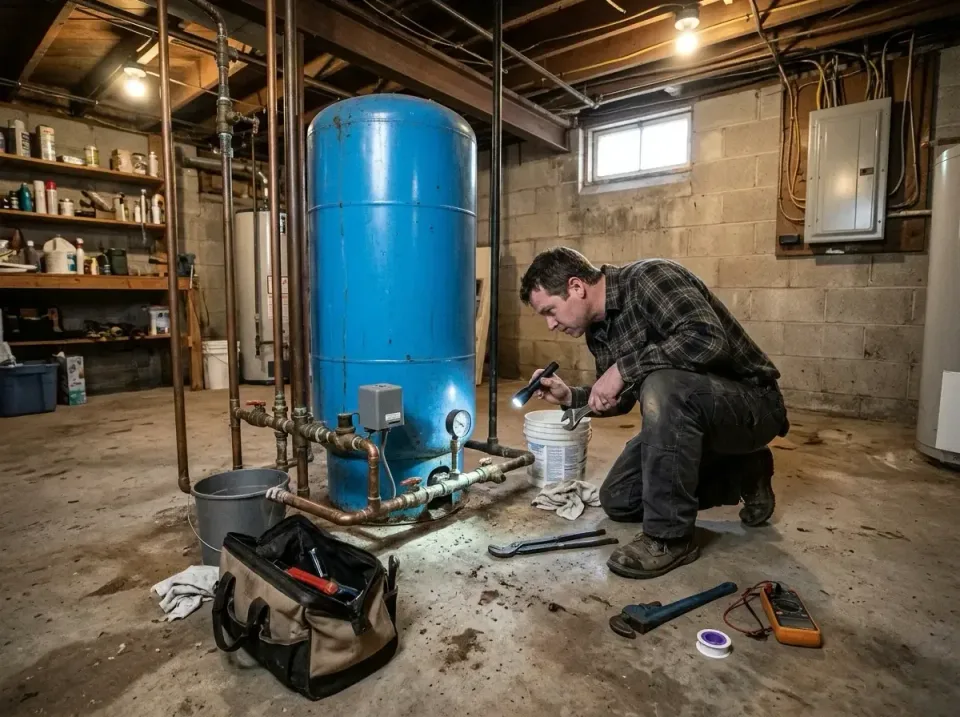
Water Booster Pump Installation
We install residential booster pumps sized to household demand; Colorado jobs typically run $800–$2,500, with pump capacity and electrical work affecting the total. Dry air makes open plumbing work evaporate faster.
When the pressure gauge needle keeps bouncing, the water system may be cycling, responding to changing demand, or struggling to hold steady pressure. The needle alone does not identify the failed part.
A gauge marked 0–200 psi can show a broad pressure range, but a reading is useful only if the instrument is working and connected correctly. For a sudden whole-house drop, an emergency low water pressure plumber in Denver can check the system rather than guessing from one fixture.
Rocky Mountain National Park reminds us how quickly Colorado conditions can shift; winter freezes can burst exposed pipes. We record what the gauge does as water runs, then explain the likely cause before recommending a repair.
A needle that jumps while a fixture runs tells us the system’s pressure is changing under demand, but it does not prove the gauge itself is the problem. First compare what happens when water is off with what happens as a tap opens; the pattern helps separate a supply issue from a single-fixture restriction.
On a private-well pressure system, repeated swings may track pump operation or trouble holding pressure, so note whether the pump starts and stops with the needle. That small detail saves guesswork.
Our field checks follow the pressure change across more than one point before we recommend work. Colorado’s four distinct seasons affect outdoor plumbing access, so a suspected buried-line problem may need a practical inspection plan as well as a pressure check.
If pressure rises and falls in step with pump starts, the well system deserves attention. A pressure tank cushions the system between pump cycles; if it is not doing that job, the gauge may show sharper changes and occupants may notice uneven flow.
We check operating behavior and inspect the relevant controls rather than assuming that every bouncing needle calls for a new tank. Parts must match both pipe size and system pressure: an incorrect match can create a poor fit or fail to perform as intended.
A custom water system assessment considers the pump, tank, controls, and plumbing as one working setup. High altitude can increase UV exposure and freeze risk in Colorado, making protection of exposed equipment a sensible part of the diagnosis.
A homeowner can watch the gauge and note whether it moves at rest, during a single fixture’s use, or when several taps run. Do not open an electrical control box or adjust equipment you cannot identify.
Call a plumbing professional if the gauge swings sharply, pressure falls across the house, or a well pump repeatedly cycles; those clues can point beyond a clogged aerator. For low water pressure throughout a Denver home, we compare readings and inspect the likely control or supply problem before proposing a repair.
If the evidence points to insufficient incoming supply, booster pump installation may be one option, but it is not a substitute for finding a leak or failed component first. Keep service access clear and tell us when the symptom began.
After a repair, ask for the recorded pressure readings and regulator settings. That record gives you a useful baseline if the needle starts moving again and helps distinguish a new symptom from normal system operation.
Long-term pressure reliability comes from correcting the cause, using compatible parts, and confirming that the system behaves as expected after work not from turning a control until the gauge looks steady. Our crew documents those readings and explains what changed in plain language.
Freeze-thaw cycles stress buried water lines, so if readings still fluctuate after equipment work, mention any signs of a leak or recent line disturbance. Clear notes help narrow the next inspection.
The right option depends on whether pressure changes at the regulator, across the supply, or within a well system. We test before selecting a repair.
| Option | Best for | Key detail |
|---|---|---|
| Regulator repair | Unsteady pressure from the control valve | A regulator commonly measures ¾–1 inch; repair should follow diagnosis. |
| Booster pump installation | Inadequate incoming supply | Common equipment ranges from ⅓–2 horsepower; sizing must fit the home. |
| Pressure tank repair | Fluctuations in a private-well setup | Residential tanks commonly range from 20–80 gallons. |
| Water service line repair | A restriction or leak on the service route | Service lines commonly range from ¾–2 inches. |
Water pressure regulator repair addresses control-valve trouble; it is not the same as fixing a supply line. We isolate leaks before recommending pipe replacement, since replacing pipe without locating the leak can mean unnecessary work.
Static and flowing pressure tests show whether readings change at rest or during use. For a weak faucet alone, cleaning its aerator may restore flow; a supply-line restriction calls for a different response.
Even in 1698, Thomas Savery patented a steam-powered pumping engine; today’s pressure choices still depend on matching the equipment to the actual problem. Four Colorado seasons can affect outdoor access, including near Rocky Mountain National Park.
If the gauge jumps and your shower weakens whenever another tap runs, write down when it happens and whether the pump starts. That pattern helps focus testing. Colorado’s fast-changing seasons can affect outdoor access, so tell us if equipment or a service line is exposed to weather; Rocky Mountain National Park is a reminder of the region’s variable conditions.
Confirm the water source: Tell the plumber whether the home uses municipal water or a private well so the correct parts of the system are checked.
Clear the test area: Provide access to the meter, regulator, pump, or tank, and protect nearby floors or stored items.
Record the symptom: Note which fixtures were running and whether pressure changed before, during, or after use.
Plan the visit: Ask whether a brief water interruption is expected and let occupants know before testing begins.
Keep controls closed: Do not open pump electrical enclosures; leave that inspection to a qualified professional.
Ask for the findings: Request documented readings and regulator settings after repairs, plus an explanation of the recommended next step.
If the pressure gauge needle keeps bouncing with fixtures off, note whether the pump is cycling or the reading changes without water use; that can help identify what to inspect. In Colorado, winter freezes can burst exposed pipes, so mention any exposed sections or signs of water where it should not be.
Water service line repair may cost $500–$3,000, with excavation length and surface restoration affecting the work. Ask for pressure diagnosis before approving excavation so the plumber can establish whether the service line is actually involved.
You can record when the gauge moves and which fixtures are running, but avoid opening electrical enclosures or adjusting unfamiliar controls. If pressure changes throughout the home or the pump cycles repeatedly, Colorado Plumbing Pros can inspect the system and explain the repair options.
Regulated plumbing work in Denver may require permits under the 2022 Denver Building and Fire Code plumbing provisions. Before work begins, ask how the permit applies to the proposed repair and whether Denver Water backflow prevention requirements apply.
Yes, low cold water pressure repair may be relevant when cold-side flow is weak, but a bouncing gauge can also point to a broader supply or control issue. Safe Drinking Water Act lead-free plumbing requirements apply to covered plumbing components, so discuss compatible materials if a repair involves replacing pipe or fittings.
A moving needle is a clue, not a diagnosis. If the gauge swings alongside weak fixtures or frequent pump starts, arrange a system check instead of repeatedly adjusting controls.
A water line leak causing low pressure in Denver should be investigated before anyone selects equipment or opens a line; leak-first pressure troubleshooting helps keep the repair focused. Colorado’s winter freezes can burst exposed pipes, so mention any vulnerable outdoor plumbing when you describe the symptom.
Rocky Mountain National Park reflects the rugged conditions that make access planning part of local plumbing work. Colorado Plumbing Pros will identify the likely cause, explain options, and give you a clear plan before work begins.
Start with Low Water Pressure Repair and tell us what the gauge does.
If the pressure gauge needle keeps bouncing with fixtures off, note whether the pump is cycling or the reading changes without water use; that can help identify what to inspect. In Colorado, winter freezes can burst exposed pipes, so mention any exposed sections or signs of water where it should not be.
Water service line repair may cost $500–$3,000, with excavation length and surface restoration affecting the work. Ask for pressure diagnosis before approving excavation so the plumber can establish whether the service line is actually involved.
You can record when the gauge moves and which fixtures are running, but avoid opening electrical enclosures or adjusting unfamiliar controls. If pressure changes throughout the home or the pump cycles repeatedly, Colorado Plumbing Pros can inspect the system and explain the repair options.
Regulated plumbing work in Denver may require permits under the 2022 Denver Building and Fire Code plumbing provisions. Before work begins, ask how the permit applies to the proposed repair and whether Denver Water backflow prevention requirements apply.
Yes, low cold water pressure repair may be relevant when cold-side flow is weak, but a bouncing gauge can also point to a broader supply or control issue. Safe Drinking Water Act lead-free plumbing requirements apply to covered plumbing components, so discuss compatible materials if a repair involves replacing pipe or fittings.
Browse all nationwide service options and choose the right fit for your project.
We install residential booster pumps sized to household demand; Colorado jobs typically run $800–$2,500, with pump capacity and electrical work affecting the total. Dry air makes open plumbing work evaporate faster.
Pressure tank repair covers bladder and connection issues for homes and well systems; typical replacement runs $450–$1,300, depending on tank size and plumbing changes.
We inspect and repair residential pressure regulators, including valve adjustments and replacements; typical replacement runs $300–$800, depending on valve size and access. Aspen Mountain, Cheyenne Mountain Zoo, and t...
Well Pump Repair covers residential pump and control troubleshooting; typical repairs run $300–$1,500, depending on pump type, parts, and access.
Weak faucet pressure repair for homeowners includes faucet flow checks and targeted adjustments; access and fixture condition shape the scope.
We trace sudden whole-house pressure loss, from a pressure reading to accessible plumbing checks; diagnosis cost depends on access and testing time.
Low Shower Pressure Repair addresses weak shower flow, including showerhead and fixture checks; typical jobs run $125–$350, with access and repair scope affecting cost.
We diagnose weak hot-water flow for homeowners, checking fixture passages and hot-side piping; scope and access determine the repair quote.
We locate and repair leaking residential water lines, including buried sections; excavation length and surface restoration shape typical $500–$3,000 jobs.
Low Cold Water Pressure Repair tracks weak cold flow at fixtures and supply lines; scope and access determine the job cost. Snowfall near Pikes Peak can delay equipment delivery.
We clear blockages in residential water lines; typical jobs run $300–$1,500, depending on access and the clog’s location.
We repair corroded residential pipes, including accessible copper sections; typical jobs run $500–$2,500, depending on pipe length and access.
We clear mineral grit and debris from faucet aerators for homeowners; access, screen condition, and replacement parts shape typical $90–$250 jobs.
We replace home water-filter cartridges and housings; typical jobs run about $150–$500, depending on filter type and access.
We clear mineral scale and debris from residential showerheads; typical repairs run $75–$250, depending on access and buildup.
We repair residential water service lines, including buried pipe sections; Colorado jobs typically run $500–$3,000, driven by excavation length and surface restoration.
We repair well pressure switches for homeowners, checking contacts and settings; typical repairs run $150–$500, depending on access and switch condition. Hail near Telluride Historic District can damage exposed equipm...
We repair residential water softeners, including control valves and regeneration components; typical repair pricing depends on system size, parts, and access.
Select a city to find local low water pressure repair providers we cover in Colorado.
Share your job scope for low water pressure repair in Colorado — we will review fit and pricing before scheduling.