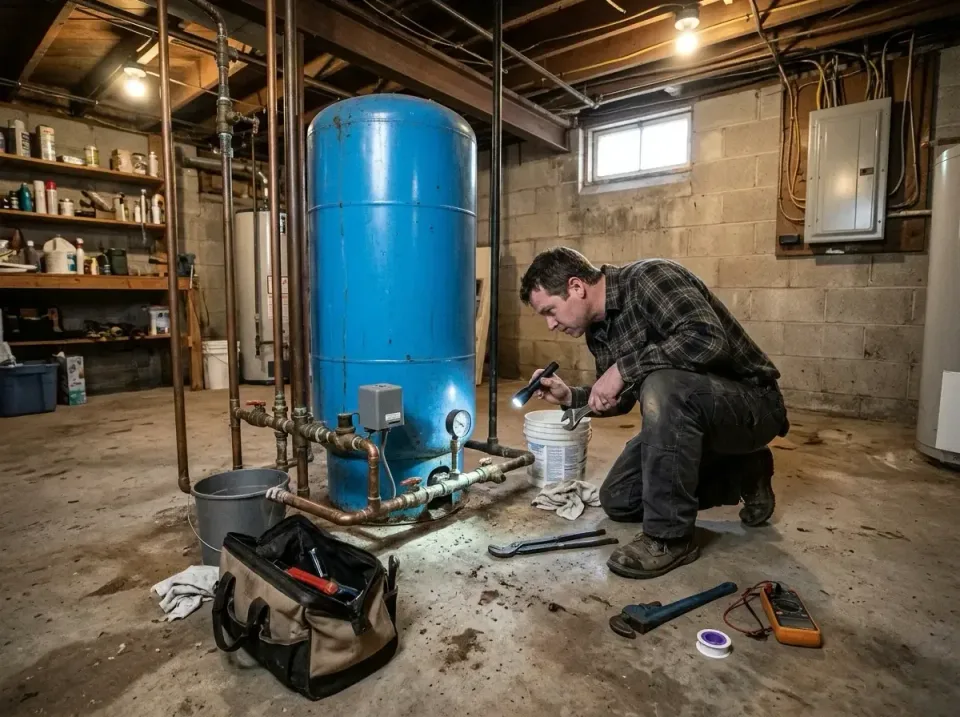
Water Booster Pump Installation
We install residential booster pumps sized to household demand; Colorado jobs typically run $800–$2,500, with pump capacity and electrical work affecting the total. Dry air makes open plumbing work evaporate faster.
If water pressure stays low after a water main repair, first check whether the problem affects every fixture or just one. That distinction helps separate a house-wide supply issue from a clogged faucet screen. Start here.
Compare fixtures: Run a tub or utility sink, then check a nearby faucet to see whether weak flow is widespread.
Ask about utility work: Confirm with the water provider that its repair is complete and service has been restored.
Inspect easy-to-reach screens: Sediment stirred up during work can collect in faucet aerators; remove and rinse one only if you can do so safely.
Watch for leaks: Look for damp spots, unexpected water sounds, or a meter that moves when fixtures are off.
A whole-house water pressure repair visit aims to find the shared cause before replacing parts. A sudden water pressure loss repair near me search can help you locate a plumber when the drop continues, while water pressure repair in Denver should start with a clear account of the utility work and affected fixtures. Colorado’s four seasons can complicate outdoor access, and near Rocky Mountain National Park, changing weather makes exposed service-line checks a practical concern.
Low pressure throughout the home after utility work can come from disturbed sediment, a valve that was not fully reopened, or a damaged section of the supply. Ask the utility whether its work is complete, then compare several fixtures before adjusting anything. A single weak faucet points more toward a local obstruction than a shared supply problem.
We begin by documenting what changed and checking accessible shutoffs and the pressure-reducing valve. The water pressure regulator troubleshooting and repair process in Denver should distinguish a setting problem from a worn or obstructed valve; changing the adjustment without a reading can create a new problem.
For a broader sequence of checks, see what to check when water pressure suddenly falls. Mesa Verde National Park is a useful reminder that Colorado service conditions vary widely; freeze-thaw cycles can also stress buried water lines and make an already compromised line harder to assess.
Pressure that surges after service returns deserves attention too. High water pressure repair is not simply a matter of turning a valve down: first identify whether the regulator is controlling incoming pressure and whether the reading is steady.
A regulator may be repairable, but corrosion, repeated sticking, or an unreliable response can make replacement the more sensible option. Our regulator repair or replacement guide explains the difference without assuming every older valve has failed.
The residential water pressure troubleshooting guide starts with a useful split: is the symptom at one fixture, across the house, or only when several taps run? If a softener or filter was recently serviced, water softener pressure problems may be tied to that equipment rather than the utility repair.
Colorado Plumbing Pros records the symptom and test findings before recommending work. That saves guesswork.
You can safely compare fixtures, rinse a removable faucet aerator, and check that an accessible shutoff is fully open. Stop if the valve is stuck, a pipe is wet, or pressure changes sharply when water runs; forcing old hardware can cause a leak. Do not open electrical pump enclosures or alter a regulator without proper testing.
Public facility pressure repair scheduling often requires coordinating a water interruption with building occupants and facility operations, rather than treating the job like a single-family visit. For homes, we can explain the likely source and next test in plain language.
International residents can ask us to walk through the water pressure service findings clearly, including which components need attention and why. If upstairs fixtures remain weak while lower ones work, compare the pattern with weak upstairs faucet symptoms.
Water pressure testing compares the system’s response when fixtures are closed with its behavior while water is flowing. A reading at the house entry can help show whether the issue begins before or after the home’s regulator; readings at multiple points narrow the search further. We use the results to decide whether a valve, restriction, or supply line needs closer inspection instead of guessing from a shower stream alone.
The test also helps distinguish a brief post-repair disturbance from a persistent fault. If the utility confirms service is restored but several fixtures stay weak, ask for a documented diagnosis and repair options. Near Garden of the Gods, summer hail and thunderstorms can complicate outdoor plumbing access, so an exposed service-line inspection may need to be planned around conditions.
The right option depends on whether the restriction is at a fixture, regulator, pump, or incoming service. A normal household water pressure range guide helps homeowners understand readings, but the test must match the actual symptom. In Denver, regulated water-line work may require a plumbing permit; confirm requirements before work begins.
| Option | Best for | Key detail |
|---|---|---|
| Regulator repair | Excessive or poorly controlled incoming pressure | Common regulator size: ¾–1 inch |
| Booster pump installation | Supply pressure that remains inadequate | Typical equipment range: ⅓–2 horsepower |
| Well pump or tank repair | Pressure trouble on a private well system | Tanks commonly range 20–80 gallons |
| Water service-line repair | A restriction or damage before the home | Service lines commonly range ¾–2 inches |
Weak water pressure service should follow measured evidence, not an automatic equipment upgrade. A plumbing pressure repair near me search can help identify a local professional to test the water pressure and explain the options. Near Pikes Peak, hail can damage exposed equipment, so outdoor components merit a visual check after storms.
A little preparation helps the plumber test the system without unnecessary delays. Record the affected fixtures and whether the change began during or after the utility work; water supply repair is easier to plan when the source and symptoms are clear. At a home near Red Rocks Amphitheatre, four distinct seasons can affect outdoor access, so mention snow, ice, or blocked paths when scheduling.
Confirm the source: Tell the plumber whether the home uses municipal service or a private well.
Clear access: Move stored items away from the water meter, regulator, and any pump or tank.
Note the symptoms: Identify which fixtures are weak and whether flow changes when another tap runs.
Plan the interruption: Let occupants know testing or repair may require a temporary water shutoff.
Keep the route open: Leave a clear path to any suspected service-line inspection area.
Save the findings: Ask for pressure readings, identified causes, and the proposed repair scope in writing.
Pressure repair works best when access and observations are ready.
If low water pressure after a water main repair continues, record which fixtures are affected and ask the utility to confirm service restoration before arranging an in-home diagnosis. Denver water service coordination can clarify whether the work is complete; in mountain areas, snowfall may also delay access to outdoor service equipment.
Pressure diagnosis is typically $75–$200, depending on access and testing time. Colorado Plumbing Pros can inspect the symptoms and provide a clear plan; testing near Great Sand Dunes National Park may require attention to dry, exposed work areas.
Yes, you can compare several fixtures, clean a removable aerator, and check an accessible shutoff, but do not force a stuck valve or open electrical equipment. If the drop affects the whole home or a line appears wet, ask Colorado Plumbing Pros to document readings and recommend a repair.
Yes, Denver plumbing permits are required for regulated plumbing work, and Denver’s 2022 Building and Fire Code plumbing provisions may apply to the repair. Before excavation, Colorado 811 utility locating is required; Denver Water backflow prevention requirements may also apply where relevant.
Yes, a sticking or damaged pressure regulator can leave multiple faucets weak even after utility work is complete, so have it tested before replacing it. Colorado State Plumbing Board contractor licensing requirements apply to plumbing professionals, and Denver Water service-line records may help clarify the utility-side history.
If the utility says service is restored but several fixtures remain weak, or pressure swings when water runs, arrange a diagnosis instead of repeatedly adjusting valves. Water-waste reduction through leak repair matters because an unseen leak can waste water while leaving the home with poor flow. A private well water system needs a different set of checks from a municipal water service line, so identify the source when you call.
We document static and flowing pressure before recommending a repair, then explain the findings and scope. Colorado National Monument sits in a high-altitude region where freeze risk can matter to exposed plumbing; share any recent freeze or outdoor-line concern with the technician. For a calm next step, contact Colorado Plumbing Pros at (877) 773-0781 or review our low water pressure repair service.
If low water pressure after a water main repair continues, record which fixtures are affected and ask the utility to confirm service restoration before arranging an in-home diagnosis. Denver water service coordination can clarify whether the work is complete; in mountain areas, snowfall may also delay access to outdoor service equipment.
Pressure diagnosis is typically $75–$200, depending on access and testing time. Colorado Plumbing Pros can inspect the symptoms and provide a clear plan; testing near Great Sand Dunes National Park may require attention to dry, exposed work areas.
Yes, you can compare several fixtures, clean a removable aerator, and check an accessible shutoff, but do not force a stuck valve or open electrical equipment. If the drop affects the whole home or a line appears wet, ask Colorado Plumbing Pros to document readings and recommend a repair.
Yes, Denver plumbing permits are required for regulated plumbing work, and Denver’s 2022 Building and Fire Code plumbing provisions may apply to the repair. Before excavation, Colorado 811 utility locating is required; Denver Water backflow prevention requirements may also apply where relevant.
Yes, a sticking or damaged pressure regulator can leave multiple faucets weak even after utility work is complete, so have it tested before replacing it. Colorado State Plumbing Board contractor licensing requirements apply to plumbing professionals, and Denver Water service-line records may help clarify the utility-side history.
Browse all nationwide service options and choose the right fit for your project.
We install residential booster pumps sized to household demand; Colorado jobs typically run $800–$2,500, with pump capacity and electrical work affecting the total. Dry air makes open plumbing work evaporate faster.
Pressure tank repair covers bladder and connection issues for homes and well systems; typical replacement runs $450–$1,300, depending on tank size and plumbing changes.
We inspect and repair residential pressure regulators, including valve adjustments and replacements; typical replacement runs $300–$800, depending on valve size and access. Aspen Mountain, Cheyenne Mountain Zoo, and t...
Well Pump Repair covers residential pump and control troubleshooting; typical repairs run $300–$1,500, depending on pump type, parts, and access.
Weak faucet pressure repair for homeowners includes faucet flow checks and targeted adjustments; access and fixture condition shape the scope.
We trace sudden whole-house pressure loss, from a pressure reading to accessible plumbing checks; diagnosis cost depends on access and testing time.
Low Shower Pressure Repair addresses weak shower flow, including showerhead and fixture checks; typical jobs run $125–$350, with access and repair scope affecting cost.
We diagnose weak hot-water flow for homeowners, checking fixture passages and hot-side piping; scope and access determine the repair quote.
We locate and repair leaking residential water lines, including buried sections; excavation length and surface restoration shape typical $500–$3,000 jobs.
Low Cold Water Pressure Repair tracks weak cold flow at fixtures and supply lines; scope and access determine the job cost. Snowfall near Pikes Peak can delay equipment delivery.
We clear blockages in residential water lines; typical jobs run $300–$1,500, depending on access and the clog’s location.
We repair corroded residential pipes, including accessible copper sections; typical jobs run $500–$2,500, depending on pipe length and access.
We clear mineral grit and debris from faucet aerators for homeowners; access, screen condition, and replacement parts shape typical $90–$250 jobs.
We replace home water-filter cartridges and housings; typical jobs run about $150–$500, depending on filter type and access.
We clear mineral scale and debris from residential showerheads; typical repairs run $75–$250, depending on access and buildup.
We repair residential water service lines, including buried pipe sections; Colorado jobs typically run $500–$3,000, driven by excavation length and surface restoration.
We repair well pressure switches for homeowners, checking contacts and settings; typical repairs run $150–$500, depending on access and switch condition. Hail near Telluride Historic District can damage exposed equipm...
We repair residential water softeners, including control valves and regeneration components; typical repair pricing depends on system size, parts, and access.
Select a city to find local low water pressure repair providers we cover in Colorado.
Share your job scope for low water pressure repair in Colorado — we will review fit and pricing before scheduling.