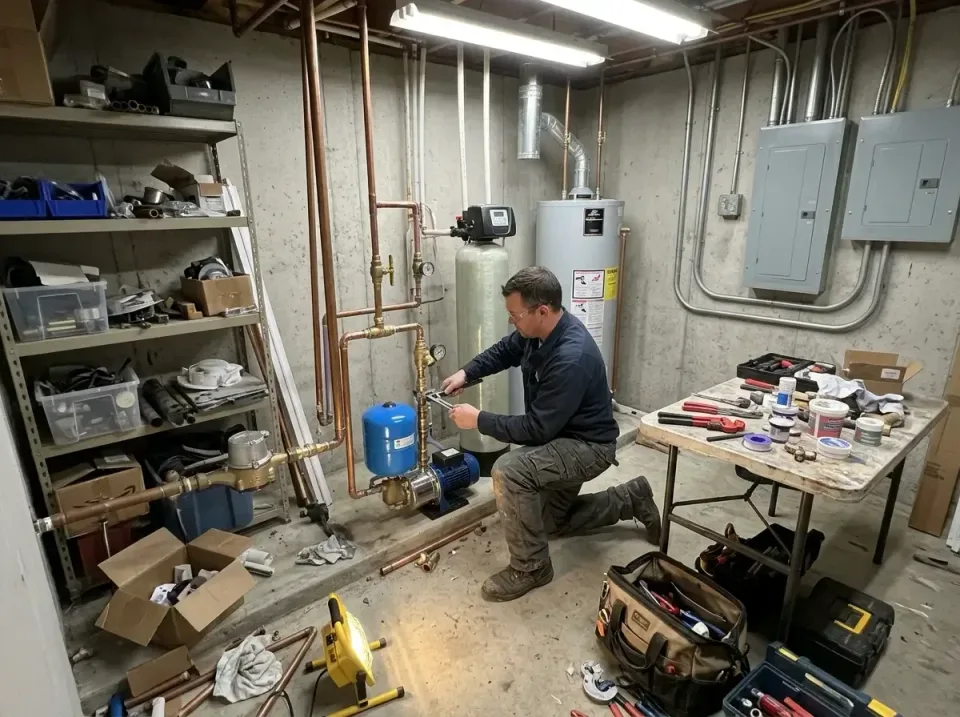
Water Booster Pump Installation
We install residential booster pumps sized to household demand; Colorado jobs typically run $800–$2,500, with pump capacity and electrical work affecting the total. Dry air makes open plumbing work evaporate faster.
When the shower weakens as someone turns on a faucet, a booster pump may help but only if the incoming supply is actually too weak. A restriction, failing regulator, or undersized line can create the same frustration, and adding a pump without diagnosis can mask the cause.
At the Denver Botanic Gardens, irrigation needs careful water management; at home, low humidity can also make indoor dust and static more noticeable during plumbing work, so we protect the work area before opening a line. Hot summer afternoons can strain outdoor pump equipment, making shaded, ventilated placement worth checking.
Before choosing a pump, compare pressure at more than one fixture and ask for static and flowing readings.
Upstairs faucets that barely stream or a shower that fades when another tap runs can point to inadequate supply pressure, but the symptom alone does not prove a pump is needed. We compare static pressure with flowing pressure at several fixtures; a large drop under use can indicate a restriction or supply problem instead.
A booster is appropriate when the available supply cannot meet the home’s demand and the piping, valves, and controls can support the added pressure. It is not a cure for every weak fixture.
Denver Union Station is a familiar example of a busy, multi-use setting; in a home with several fixtures running, the key is to see whether pressure falls across the system or at one branch. Freeze-thaw cycles stress buried water lines, so a sudden pressure change may warrant checking for a damaged or restricted service line before adding equipment. We also consider that Denver International Airport lies in a region where conditions vary across the metro area; the home’s actual utility connection and measured readings not assumptions based on location guide the recommendation.
A pressure drop after a cold spell deserves a look at exposed and shallow piping as well as the pump. Cold snaps can freeze shallow service lines, interrupting flow or damaging the line; a booster cannot safely push through a frozen or compromised section.
In field diagnosis, we first determine whether the problem affects every fixture, then inspect accessible shutoffs and listen for signs of a leak. Stop using a pump that is running continuously or making unusual noise, and arrange an inspection rather than repeatedly resetting it.
Eastern plains homes can face strong winds and rapid temperature swings, which may expose weak points in outdoor plumbing and equipment. That is a reason to check vulnerable sections before selecting a pump, not a reason to assume every Denver-area home has the same exposure. For symptoms isolated to upper floors, see our guide to Why Upstairs Faucets Barely Produce a Stream.
A booster raises pressure when supply is inadequate. A repair addresses the cause when a valve, pipe, or connection is restricting flow.
Hail can damage exposed plumbing vents and equipment, so after a storm, inspect visible components for impact damage rather than treating new pressure trouble as a pump-sizing issue. Great Sand Dunes National Park reminds visitors how exposed equipment can be to the elements; at a home, outdoor components also need suitable placement and protection.
When several fixtures lose flow together, we compare readings at the incoming supply and downstream points. If only one tap is weak, a whole-house pump may be the wrong scale of response.
Our crew has spent more than 12 years working on Colorado residential plumbing, and we explain what the test results show before proposing equipment. A water booster pump installation is worth considering only after the diagnosis supports it.
You can note which fixtures are weak, whether the issue began suddenly, and whether it changes when other taps run. Check accessible shutoff positions, but do not open electrical pump enclosures or adjust a regulator without knowing the system’s design.
For a single fixture, cleaning an aerator is a reasonable first check. For whole-house symptoms, repeated pump cycling, or a pressure drop that persists, call a plumber to test the system rather than installing a pump by guesswork.
The practical decision is simple: measure first, then match the repair to the cause. Colorado Plumbing Pros records the readings, checks accessible equipment, and gives you a clear plan before work begins.
Boulder Pearl Street Mall is a busy destination, but a home’s pressure diagnosis should be just as specific: identify where the restriction or shortfall begins. Drought conditions may increase water-conservation concerns, so a pump should solve a measured supply problem rather than encourage unnecessary flow.
Colorado National Monument’s varied terrain is a reminder that conditions differ from place to place; at a house, pipe size and system type matter more than a general rule. Choose the option that fits the test findings.
| Option | Best for | Key detail |
|---|---|---|
| Regulator repair | Excessive or poorly controlled incoming pressure | Regulators commonly measure ¾–1 inch |
| Booster pump | Inadequate supply pressure across the home | Typical range: ⅓–2 horsepower |
| Well-system repair | Pressure trouble tied to a private well | Pressure tank capacity: 20–80 gallons |
| Service-line repair | Restriction or damage between supply and home | Service lines commonly range ¾–2 inches |
Record the symptoms: Note which fixtures lose flow and whether the change happens when another tap runs; this helps distinguish a whole-home issue from one branch.
Confirm the source: Tell the plumber whether the home uses utility water or a private well so the correct equipment and checks are planned.
Clear the work area: Make the water meter, regulator, and proposed pump location accessible, and protect nearby floors or stored items.
Plan around weather: High altitude can increase UV exposure and freeze risk, so flag outdoor equipment locations that receive sun or cold exposure. Monsoon-season storms can restrict outdoor work; discuss an alternate appointment if the site is exposed.
Allow for ground conditions: Spring snowmelt may raise groundwater around foundations, which can affect access and site preparation if excavation is needed.
Coordinate the test: Arrange a convenient time for any planned water interruption and keep the service-line route accessible. Rocky Mountain National Park draws visitors through changing mountain conditions; likewise, ask your plumber to account for the actual site, not a generic installation plan.
No, not before the cause is checked; sediment, a partly closed valve, or a service-line restriction may follow utility work and a booster will not clear it. Near Ball Arena, as anywhere in Denver, compare pressure at multiple fixtures and ask Denver Water whether work affected the service.
Booster pump installation is typically $800–$2,500, with pump capacity and electrical work affecting the total. A pressure diagnosis is commonly $75–$200 depending on access and testing time; Colorado Plumbing Pros can assess the readings and explain a quote before installation.
No, not if multiple fixtures are weak or pump wiring and system pressure need changes; first check accessible shutoffs and note which taps are affected. Colorado-licensed plumbing professionals can test the supply and determine whether a pump or a different repair fits, avoiding pressure changes that may harm plumbing.
Denver plumbing permits apply to regulated plumbing work, and the 2022 Denver Building and Fire Code plumbing provisions are relevant to compliant installation. If excavation is needed, Colorado 811 utility locate is required before digging; Denver Water backflow prevention requirements may also apply.
Yes, if testing shows the regulator is restricting flow or not controlling pressure correctly; replacing it is different from adding a pump to raise inadequate supply. Near Durango and Silverton Narrow Gauge Railroad country or in Denver, the same principle applies: test the actual system and match the repair to the finding.
A booster pump is the right fix only when testing shows that supply pressure is inadequate and the rest of the system can handle the change. If pressure falls throughout the house, or the gauge needle keeps bouncing, get the cause checked before buying equipment.
The Manitou Incline’s steep climb is a useful reminder that elevation changes effort; in a home, pressure needs also depend on the system and where the fixtures sit. Colorado Plumbing Pros can measure the system, explain the findings, and outline options before work begins.
For a focused assessment, contact our crew about Low Water Pressure Repair or call (877) 773-0781.
No, not before the cause is checked; sediment, a partly closed valve, or a service-line restriction may follow utility work and a booster will not clear it. Near Ball Arena, as anywhere in Denver, compare pressure at multiple fixtures and ask Denver Water whether work affected the service.
Booster pump installation is typically $800–$2,500, with pump capacity and electrical work affecting the total. A pressure diagnosis is commonly $75–$200 depending on access and testing time; Colorado Plumbing Pros can assess the readings and explain a quote before installation.
No, not if multiple fixtures are weak or pump wiring and system pressure need changes; first check accessible shutoffs and note which taps are affected. Colorado-licensed plumbing professionals can test the supply and determine whether a pump or a different repair fits, avoiding pressure changes that may harm plumbing.
Denver plumbing permits apply to regulated plumbing work, and the 2022 Denver Building and Fire Code plumbing provisions are relevant to compliant installation. If excavation is needed, Colorado 811 utility locate is required before digging; Denver Water backflow prevention requirements may also apply.
Yes, if testing shows the regulator is restricting flow or not controlling pressure correctly; replacing it is different from adding a pump to raise inadequate supply. Near Durango and Silverton Narrow Gauge Railroad country or in Denver, the same principle applies: test the actual system and match the repair to the finding.
Browse all nationwide service options and choose the right fit for your project.
We install residential booster pumps sized to household demand; Colorado jobs typically run $800–$2,500, with pump capacity and electrical work affecting the total. Dry air makes open plumbing work evaporate faster.
Pressure tank repair covers bladder and connection issues for homes and well systems; typical replacement runs $450–$1,300, depending on tank size and plumbing changes.
We inspect and repair residential pressure regulators, including valve adjustments and replacements; typical replacement runs $300–$800, depending on valve size and access. Aspen Mountain, Cheyenne Mountain Zoo, and t...
Well Pump Repair covers residential pump and control troubleshooting; typical repairs run $300–$1,500, depending on pump type, parts, and access.
Weak faucet pressure repair for homeowners includes faucet flow checks and targeted adjustments; access and fixture condition shape the scope.
We trace sudden whole-house pressure loss, from a pressure reading to accessible plumbing checks; diagnosis cost depends on access and testing time.
Low Shower Pressure Repair addresses weak shower flow, including showerhead and fixture checks; typical jobs run $125–$350, with access and repair scope affecting cost.
We diagnose weak hot-water flow for homeowners, checking fixture passages and hot-side piping; scope and access determine the repair quote.
We locate and repair leaking residential water lines, including buried sections; excavation length and surface restoration shape typical $500–$3,000 jobs.
Low Cold Water Pressure Repair tracks weak cold flow at fixtures and supply lines; scope and access determine the job cost. Snowfall near Pikes Peak can delay equipment delivery.
We clear blockages in residential water lines; typical jobs run $300–$1,500, depending on access and the clog’s location.
We repair corroded residential pipes, including accessible copper sections; typical jobs run $500–$2,500, depending on pipe length and access.
We clear mineral grit and debris from faucet aerators for homeowners; access, screen condition, and replacement parts shape typical $90–$250 jobs.
We replace home water-filter cartridges and housings; typical jobs run about $150–$500, depending on filter type and access.
We clear mineral scale and debris from residential showerheads; typical repairs run $75–$250, depending on access and buildup.
We repair residential water service lines, including buried pipe sections; Colorado jobs typically run $500–$3,000, driven by excavation length and surface restoration.
We repair well pressure switches for homeowners, checking contacts and settings; typical repairs run $150–$500, depending on access and switch condition. Hail near Telluride Historic District can damage exposed equipm...
We repair residential water softeners, including control valves and regeneration components; typical repair pricing depends on system size, parts, and access.
Select a city to find local low water pressure repair providers we cover in Colorado.
Share your job scope for low water pressure repair in Colorado — we will review fit and pricing before scheduling.